Artificial intelligence has revolutionized how we access knowledge, solve problems, and work. Tools like ChatGPT, AI tutors, and writing assistants have made tasks faster and more efficient. But as we become more dependent on these tools, we risk losing something essential: the ability to learn deeply, think critically, and solve problems independently.
1. Reduced Critical Thinking
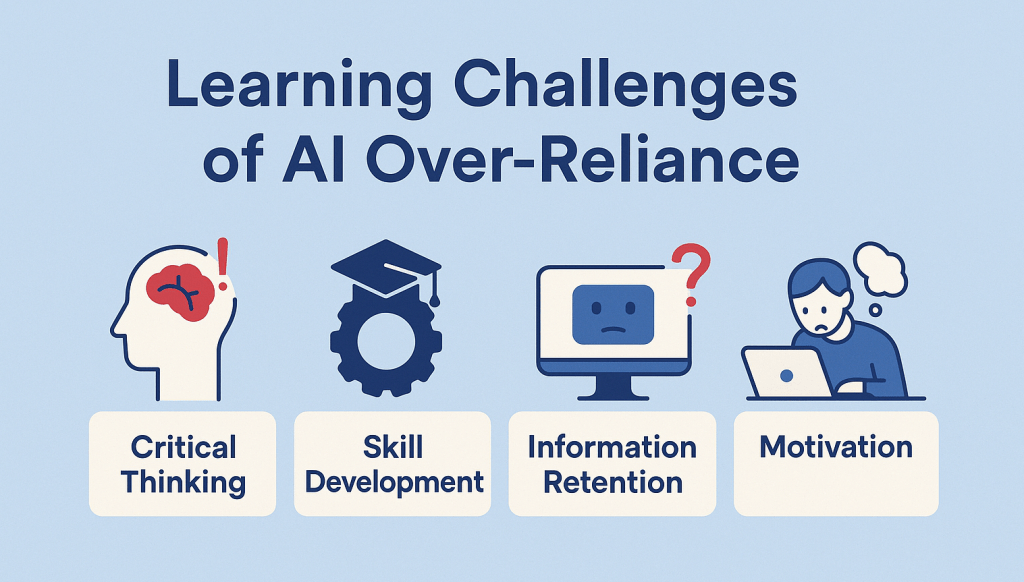
When AI offers instant answers, there’s less incentive to ask questions, evaluate sources, or challenge assumptions. Students may accept AI-generated responses at face value, which can stunt their reasoning skills and lead to surface-level understanding rather than true comprehension.
2. Over-Reliance Weakens Problem-Solving Skills
AI can solve math problems, write essays, and even code. But if we depend on it for every step, we bypass the struggle that’s necessary for developing logic, creativity, and resilience. Struggling through challenges builds confidence and long-term retention—something AI can’t replicate.
3. Lack of Personalization in Learning
AI may offer quick solutions, but it doesn’t always adapt well to individual learning styles. It can’t replace the human element of mentorship, where teachers notice emotional cues, adapt lessons, and provide real-life context. Over-relying on AI may lead to gaps in personal engagement and self-directed learning.
4. Passive Learning Habits
Many users treat AI as a shortcut rather than a learning aid. Copying content, using AI to complete homework, or bypassing research can turn education into a checklist task instead of a meaningful experience. This passive learning mindset weakens curiosity and long-term intellectual growth.
5. Data Dependency and Accuracy Concerns
AI doesn’t always get it right. If users don’t fact-check or question responses, they may absorb incorrect or biased information. This can lead to misunderstandings, especially in complex subjects like science, history, or law.
Conclusion
AI is a powerful tool—but it’s just that: a tool. Real learning happens when we struggle, reflect, and engage deeply. By balancing AI use with active learning, we can enjoy the benefits of technology without losing essential human skills.
👍 Like this article?
📢 Share this post with students, educators, and curious minds.
📬 Subscribe to my blog for more insights on AI, education, and digital literacy!
 The Wise Report
Leave a comment